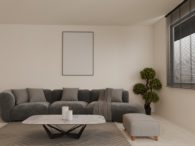
A sectional can make a small living room feel comfortable and inviting, but only if the size and placement work with the room. In Houston, MO, where you can find everything from historic houses to newer single-family homes, living room dimensions and traffic patterns can vary considerably.
The goal is not simply to fit the sectional through the door. It is to create a room where people can sit comfortably, walk naturally, and use the space without the furniture overwhelming it.
Quick answer: Arrange a sectional in a small living room by placing its longest side against the room’s longest practical wall, keeping major walkways open, and pointing the seating toward the room’s natural focal point. In especially tight spaces, an L-shaped sectional with a chaise can provide generous seating without requiring several separate chairs and sofas.
What local homeowners should know
-
Measure the entire room and the sectional before deciding where the furniture will go.
-
Keep the main path between entrances, hallways, and adjoining rooms as unobstructed as possible.
-
Houston homes include both historic houses and newer single-family properties, so there is no single sectional layout that works for every local floor plan.
-
Homes around Texas County may benefit from furniture that serves more than one purpose, especially when the living room has limited floor space.
-
A smaller sectional that fits the room comfortably will usually look better than a larger model squeezed between walls and doorways.
Why Does Sectional Placement Matter in a Small Houston Living Room?
Sectional placement matters because one large piece of furniture can determine how nearly the entire living room functions. In a smaller Houston living room, the right arrangement can preserve walking space, make conversation easier, and give the room a more open appearance without sacrificing comfortable seating.
Houston sits in central Texas County in the Missouri Ozarks, with U.S. Route 63 and Missouri Route 17 meeting in the community. Nearby Cabool is roughly 15 miles southwest, while Licking is about 12 miles northeast. That rural, small-town setting includes a mix of home styles rather than one standardized floor plan.
Crowley’s Homeworks understands that furniture selection should start with the room itself. We recommend thinking about dimensions, doors, windows, traffic flow, and how your household actually uses the living room before focusing on a particular sectional style.
What Does Local Housing Data Tell Us?
Local housing data shows that Texas County is predominantly a homeowner community, which makes practical, long-term furniture choices especially relevant. U.S. Census Bureau QuickFacts reports an owner-occupied housing rate of 77.2 percent for Texas County during 2020 through 2024.
The City of Houston also describes the community as having both historic houses and newly built single-family homes. Those differences matter when arranging furniture. An older home may have smaller rooms, multiple doorways, or architectural details to work around, while a newer open layout can create different challenges when defining the living area.
What Sectional Layout Works Best in a Small Room?
The best sectional layout usually puts the largest portion of the sofa along a wall while allowing the shorter return or chaise to define the seating area. This approach uses the perimeter efficiently and keeps more of the center of the room available for movement.
Start by identifying your focal point. That might be a television, fireplace, window, or simply the center of the conversation area. Then consider three common arrangements:
Against the longest wall: This is often the simplest choice for a compact rectangular living room.
In a corner: An L-shaped sectional can take advantage of a corner that might otherwise be difficult to furnish.
Floating slightly away from a wall: In an open floor plan, the sectional can visually separate the living area from a dining or kitchen space.
The right option depends more on the actual room than on decorating rules.
What Are the Signs a Sectional Is Too Large?
A sectional is too large when it interferes with normal movement, blocks useful features, or makes the rest of the room difficult to furnish. Houston homeowners should evaluate the sectional in relation to doors, windows, walkways, tables, and other furniture rather than judging size from seating capacity alone.
Watch for these warning signs:
-
You have to turn sideways to walk past the sectional.
-
A chaise extends into the main path through the room.
-
The sectional prevents a door from opening fully.
-
End tables or a coffee table no longer fit comfortably.
-
Part of a window is unnecessarily blocked.
-
The sectional dominates nearly every visible wall.
-
Reclining seats, if included, cannot fully operate.
Painter’s tape can help before you buy. Mark the sectional’s footprint on the floor and live with that outline for a day or two.
How Much Walking Space Should You Leave Around a Sectional?
Walking space around a sectional should be generous enough for people to move through the room naturally without constantly navigating around corners or tables. Instead of forcing an exact measurement into every Houston home, prioritize the routes your household uses most frequently and make those paths feel easy and unobstructed.
Pay particular attention to the route from the front or side entrance toward a hallway, kitchen, or other frequently used room. A few inches gained by changing sectional orientation can sometimes make a surprisingly large difference.
Also consider how the room functions when guests visit. A layout that works for one person sitting alone may feel cramped when several people are moving between seats.
How Can You Make a Sectional Look Smaller in the Room?
You can make a sectional look less imposing by reducing visual clutter around it and choosing appropriately scaled companion pieces. In a compact Texas County living room, a simple arrangement often creates a more spacious feeling than surrounding a large sofa with multiple bulky tables, chairs, and storage pieces.
Consider a smaller coffee table or nesting tables instead of an oversized centerpiece. A floor lamp can sometimes replace a table-and-lamp combination. Keeping some floor visible around the sectional also helps define the sofa without making the room feel packed.
Rug placement matters too. The rug should visually connect the seating area rather than creating another competing shape in an already compact room.
What Common Sectional Arrangement Mistakes Should You Avoid?
The most common sectional arrangement mistakes involve buying before measuring, blocking traffic, and focusing on seating capacity instead of the whole room. In a smaller Houston home, correcting these problems after delivery can be much harder than planning for them before choosing the furniture.
Mistake: Buying based only on showroom appearance.
Consequence: Furniture can look smaller in a large showroom than it does at home.
Better approach: Measure your living room and compare those dimensions with the sectional.
Mistake: Ignoring the chaise direction.
Consequence: The chaise may project directly into a doorway or walkway.
Better approach: Decide whether a left-facing or right-facing configuration works with your floor plan before ordering.
Mistake: Filling every available corner.
Consequence: The room can feel cluttered even when everything technically fits.
Better approach: Leave visual breathing room and prioritize the furniture you actually use.
Mistake: Forgetting delivery access.
Consequence: A sectional that fits the room may still be difficult to move through an entrance, hallway, or turn.
Better approach: Measure the delivery path as well as the final location.
What Is a Common Small-Living-Room Scenario in Houston?
A common small-living-room scenario is a rectangular room where one wall provides the best location for a television while another side connects to a hallway or adjoining space. The challenge is keeping that route usable while providing enough seating for family and visitors.
An L-shaped sectional can work well here when its long side follows a wall and its shorter side stays away from the primary traffic route. A compact table or ottoman can complete the seating area without requiring another full-size chair.
This is a general local scenario rather than a specific customer project. Every room should be measured individually.
How Can the Right Furniture Help a Small Living Room?
The right furniture helps a small living room by providing the seating you need without using floor space inefficiently. For households in Houston and surrounding Texas County communities, that may mean choosing a compact sectional, a sectional with a chaise, or another seating combination based on the room dimensions.
We can help shoppers compare furniture options with their available space and preferred layout in mind.
Should You Choose a Sectional or Sofa and Chairs?
A sectional is often useful when you want substantial seating concentrated in one area, while a sofa and chairs provide greater flexibility. The better choice for a small Houston living room depends on the shape of the room, number of people you regularly seat, and whether you expect to rearrange your furniture frequently.
A sectional can make an unused corner productive and create a clearly defined conversation area. Separate pieces, however, are easier to reposition and can accommodate rooms with several doors or unusual architectural features.
Before choosing, sketch both layouts using actual furniture dimensions. Comparing footprints is much more useful than comparing the pieces by appearance alone.
What Areas Can Use These Small-Space Furniture Ideas?
These small-space furniture principles can work throughout Houston and elsewhere in the surrounding Texas County area. Nearby communities such as Cabool and Licking have their own mix of floor plans, so measurements and traffic patterns should guide the final arrangement rather than a one-size-fits-all layout.
What Happens If You Choose the Wrong Sectional Size?
Choosing the wrong sectional size can leave a small room feeling crowded and make everyday movement less convenient. The biggest cost is often practical: you may end up with furniture that does not suit the room, requires an awkward arrangement, or needs to be replaced sooner than expected.
Taking measurements before shopping reduces that risk. Record room dimensions, door openings, windows, hallways, and any permanent features that affect furniture placement.
FAQ
Can a sectional really work in a small living room in Houston, MO?
Yes, a sectional can work very well in a small Houston living room when its dimensions and configuration match the available space. A compact L-shaped design can sometimes use a corner more efficiently than a sofa plus several chairs. Measure first, then compare the sectional footprint with your primary walking routes.
Should I put my sectional against the wall?
Putting a sectional against the wall is often a practical solution in a small room because it preserves open floor space. It is not mandatory, however. Some Houston homes with more open floor plans may benefit from floating the sectional slightly into the room to separate the living area from adjoining spaces.
Which way should the chaise face?
The chaise should face the direction that keeps your main walkway open and avoids blocking doors or frequently used passages. Before choosing a left-facing or right-facing sectional, stand in your Texas County living room and identify how people naturally move through it. Let that traffic pattern guide the configuration.
How do I measure my Houston living room for a sectional?
Measure the room’s length and width, then record doors, windows, hallways, vents, and other features that affect placement. Next, use the sectional’s listed dimensions to mark its footprint on your floor. Painter’s tape provides an easy way to visualize how much usable space will remain.
Can I put a sectional in front of a window?
Yes, a sectional can sometimes sit in front of a window if the back does not interfere with the window’s function or create an awkward visual barrier. In Houston homes with attractive outdoor views or good natural light, consider whether another wall could preserve more of the window before committing to that arrangement.
Is an L-shaped sectional good for a small Texas County home?
An L-shaped sectional can be an efficient choice because it concentrates seating in a corner or along two sides of the living area. The key is scale. A compact sectional may work beautifully, while an oversized model can overwhelm the same room. Always compare exact dimensions before purchasing.
Should the sectional face the TV or the room entrance?
The sectional should generally orient toward the room’s main focal point while preserving a clear path from the entrance. If television viewing is the room’s primary activity, facing the TV makes sense. If conversation matters more, arrange the sectional to make interaction comfortable while keeping Houston household traffic flowing naturally.
How can I make my small living room feel less crowded?
Make a small living room feel less crowded by limiting oversized companion furniture, preserving clear walkways, and leaving some visible floor around the seating area. In a compact Houston room, one well-scaled sectional with a smaller table can sometimes feel more organized than several individual upholstered pieces competing for space.
Create a More Comfortable Living Room in Houston
A small living room does not have to mean uncomfortable seating. Careful measurements, the right sectional configuration, and a clear understanding of your household’s traffic patterns can help you use the available space much more effectively.
At Crowley’s Homeworks, we can help you explore furniture options with your room, seating needs, and preferred layout in mind.
Find the Right Fit for Your Houston Living Room
Choose furniture based on how your home actually looks and functions, not simply how a sectional appears on a showroom floor.